Why AI Era Job Descriptions Will Prioritize Cognition Over Tasks

Egor Pushkin, Chief Architect, Data and AI, Oracle Cloud Platform.

For three years, the conversation about work has fixated on a single question: Which jobs will vanish? Given what we know now, that’s not the question to ask.
Inside firms, AI is changing tasks—and, with those tasks, how they hire and organize. Controlled studies show large gains on routine cognitive work (drafting, summarizing, reformatting) but clear limits when tasks require planning, judgment under uncertainty or meticulous factual grounding.
Translation: AI accelerates the lower rungs of cognition and exposes the premium of human ability on the upper rungs.
How It Worked In The Past
Historically, companies staffed by role and domain: a marketer, an analyst, a project manager. Each role bundled a jagged mix of low‑, medium‑ and high‑load tasks—everything from formatting decks to negotiating roadmaps.
Generative AI has effectively “unbundled” what was previously a unified package. In a randomized trial with 444 professionals, ChatGPT cut time by about 0.8 standard deviations (SDs) and raised quality by about 0.4 SDs, with work shifting from rough drafting toward ideation and editing—subtasks within larger roles.
That’s not job replacement; it’s job remodeling at the task level.
AI Employees
What’s new now is the language—and the architecture—of AI team mates. Salesforce’s Agentforce frames “digital labor” as agents that reason over enterprise data and act across sales, service and marketing. Leaders are drawing org charts where some boxes are people and others are agents, with lifecycle controls, testing and escalation paths.
On the engineering side, Cognition’s Devin markets an “AI software engineer” that proposes a plan, writes code, runs tests and iterates in a sandbox—occupying work once assigned to a junior developer. Hype aside, the substance is clear: Competencies once tied to job ladders are being packaged as services and assigned to software “colleagues.”
Lean AI‑native companies then scale revenue with surprisingly small headcount. Perplexity, for example, has been reported crossing the nine‑figure annualized run rate (ARR) while still behaving like a startup, a pattern mirrored by other AI product firms.
The managerial lesson isn’t a single “killer role”; it’s ARR per cognitive node rising as agents take the repetitive load.
A Fundamental Shift In Role Definition
What’s actually changing? Three things:
1. We’re moving from domains to cognitive functions.
Instead of hiring “a B2B marketer,” firms increasingly hire for portable cognitive capabilities and compose domain scaffolding with agents, data and context. Lower‑rung tasks are delegated; higher‑order cognition is the human lane. Higher-level tasks include: problem framing under ambiguity; hypothesis generation; planning across interdependencies; adversarial review; narrative synthesis.
Evidence from a 758‑consultant field experiment shows large gains on tasks inside the model’s frontier (speed up 25%, quality up 40%, completion up 12%) and degradation outside it—so pairing matters.
2. Models still fumble with planning and truthfulness.
Hallucinations remain unsolved, and AI still shows weak autonomous planning. New “reasoning” models improve multi‑step thinking, but even their own evaluations and independent tests show an incomplete climb toward reliable planning.
That’s why orchestration, retrieval and human verification are first‑class citizens in enterprise AI.
3. Competency frameworks re‑center on cognition and coordination.
The World Economic Forum’s latest skills outlook keeps analytical and creative thinking at the top of employer demand—durable capabilities that transfer across tools and sectors. Hiring rubrics will weigh ambiguity tolerance, systems reasoning and evaluation craft more than static tool checklists.
The upshot: The smallest unit of work is no longer the role—it’s the cognitive function. Future job descriptions read like cognitive contracts: “Can you decompose fuzzy problems, plan across dependencies, stress‑test AI outputs and drive decisions that survive contact with reality?”
Going Beyond Individual Cognition
Pre‑AI knowledge work often succeeded as solo throughput: a person, a desk, a deliverable. That’s the part AI accelerates the most. What rises in value is cross‑cognitive collaboration—how well teams combine human judgment with agent competence to get to clarity and correctness faster.
Thomas Malone’s “superminds” framing is the right metaphor: Design the unit of intelligence as the group, not the individual. In practice, the most effective teams will likely adopt “Centaur” and “Cyborg” modes—explicitly dividing labor with the model or interleaving human/AI steps—and make the handoffs, review gates and escalation paths explicit.
Hiring practices are even being reframed by this development. The old debate about puzzle interviews gets a twist: We’re not screening for cute riddles. We’re assessing repeatable habits of mind. Problem decomposition, probabilistic reasoning, adversarial testing and, critically, knowing when not to use the model.
Given the “jagged frontier,” the best candidates demonstrate detection of off‑frontier tasks and a plan to route them to humans, tools or slower, more verifiable workflows.
“We hire you to think.” Job description: “Ability to apply cognition to solving problems. Demonstrated planning under uncertainty, orchestration of human/AI teams and measurable improvements in decision quality.”
Next: The Physical World
The same pattern is moving down the staircase from bits to atoms.
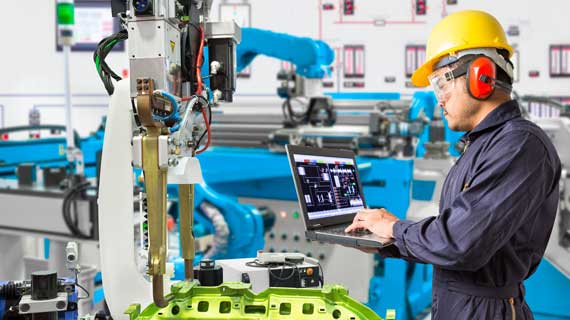
Amazon now reports more than 1 million robots deployed across operations, with new systems (Sequoia, Vulcan, Blue Jay) taking over repeatable, ergonomically tough tasks while humans supervise, integrate and handle exceptions. That’s the physical counterpart to the cognitive shift: automation climbs the lower rungs; people own planning, integration and safety.
On the frontier, milestone‑based deployments of general‑purpose robots are entering real factories. BMW’s agreement with Figure signals cautious integration of humanoids into automotive production—again, with humans choreographing complex workflows and robots handling bounded, repetitive steps. Expect brittleness at the edges for a while; expect steady expansion of the “automatable” slice.
Conclusion
AI isn’t simply deleting jobs; it’s rewriting what we hire people to do. Roles dissolve into cognitive functions; individuals become nodes in joined‑mind workflows; and the premium shifts decisively toward high‑order thinking and coordination.
Craft and tool skills were the edge in the last phase. The next phase prizes vision, systems analysis and the discipline to design and govern human‑agent workflows that deliver decisions that hold up under reality. The architects of that future look less like narrow specialists and more like philosophers with operator instincts.
Forbes Technology Council is an invitation-only community for world-class CIOs, CTOs and technology executives. Do I qualify?
link