how AI is impacting the job market: AI Is wiping out entry-level roles! Check if your job is safe or at risk

The rise of generative AI tools like ChatGPT is no longer just a futuristic concept, it’s now actively altering who gets hired and who doesn’t. A new study by Stanford economists Erik Brynjolfsson, Bharat Chandar, and Ruyu Chen, found that entry-level employees are taking the hardest hit, as per a CBS News report.
New Stanford Study Shows AI Is Displacing Entry-Level Workers
The study, based on employment data from payroll processor ADP, which covers 25 million workers, found that since 2022, early-career workers in the most AI-exposed fields have seen their employment drop by 13%, according to the report. These are seen in industries where generative AI can perform many tasks traditionally handled by humans, and it’s not just speculation, this trend is already showing up in the numbers, as per the CBS News report.
The research found that two fields in particular where AI already is replacing a significant number of young workers are software engineering and customer service, according to the report. The study shows that between late 2022 and July 2025, entry-level employment in those areas dropped about 20%, while employment for older workers in the same jobs increased, as reported by CBS News.
ALSO READ: Stop overpaying! The hottest iPhone deals let you score big with trade-ins and new lines

 iStock
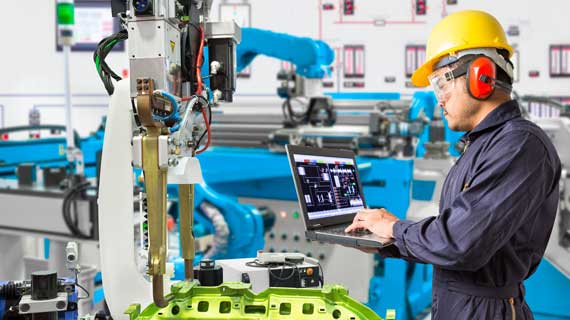
Job losses due to AI (Image: iStock)
Why Are Young Workers More Affected by AI?
Stanford’s Erik Brynjolfsson explained that “These large language models are trained on books, articles and written material found on the internet and elsewhere,” as quoted in the report. Brynjolfsson added, “That’s the kind of book learning that a lot of people get at universities before they enter the job market, so there is a lot of overlap with between these LLMs and the knowledge young people have,” as quoted by CBS News.
Jobs Most Vulnerable to AI
Jobs like accounting, auditing, programming, sales, and administrative roles are also seeing this generational divide. For workers aged 22 to 25 in AI-exposed industries, overall employment dropped by 6%, as per CBS News. Meanwhile, for older workers in the same sectors, employment rose between 6% and 9%, as per the report.
ALSO READ: Trump’s 401(k) changes leave retirees divided — here’s what they are really saying
Older Employees Benefit from Experience and Soft Skills
The study found that this divided happens as older employees have experinence of the workplace for a longer period of time and are more likely to have picked up the kinds of communication and other “soft” skills that are harder to teach and that employers may be reluctant to replace with AI, as reported by CBS News.
Brynjolfsson pointed out that, “Older workers have a lot of tacit knowledge because they learn tricks of trade from experience that may never be written down anywhere,” adding, “They have knowledge that’s not in the LLMs, so they’re not being replaced as much by them,” as quoted by CBS News.
iStockWhich Jobs Are Most and Least Exposed to AI?
The research also categorized jobs by how much they’re impacted by AI. Among those least affected are roles in maintenance, home health care, housekeeping, and freight moving, as per the report. On the other end of the spectrum, the most exposed jobs include customer service representatives, software developers, administrative assistants, and financial managers, according to CBS News report.
ALSO READ: Top AI Tools of 2025: Is ChatGPT still leading or is Gemini, Grok, DeepSeek taking over?
AI Isn’t Just Taking Jobs, It’s Changing How Work Gets Done
However, the study makes clear that AI isn’t just eliminating jobs, it’s also transforming them. In some industries, especially in healthcare, AI is being used to support workers by handling repetitive tasks, giving people more time to focus on the parts of their jobs that require human interaction and care, as per the report.
Federal Reserve Bank of St. Louis’ report found that as of late 2024, 23% of employees were using generative AI in their jobs at least once per week, showing that the technology is quickly becoming a standard part of many workplaces, according to the CBS News report.
Even though entry-level employment has dropped in professions that are most exposed to AI, this decline has not occurred in jobs where employers are using these tools to support and expand what employees do, reported CBS News.
ALSO READ: How AI agents are taking control of your company — sharing secrets, making costly decisions, and deleting data
Adapting to AI Skills Crucial for Young Workers’ Success
Brynjolfsson highlighted that, “Workers who are using these tools to augment their work are benefiting,” adding, “So there’s a rearrangement of the kind of employment in the economy,” as quoted in the report.
The latest report from AI staffing firm Burtch Works discovered that the starting salaries for entry-level AI workers increased by 12% from 2024 to 2025, reported CBS News.
Brynjolfsson suggested that, “Young workers who learn how to use AI effectively can be much more productive,” but also warned that, “But if you are just doing things that AI can already do for you, you won’t have as much value-add,” as quoted in the report.
He added, “This is the first time we’re getting clearer evidence of these kinds of employment effects, but it’s probably not the last time. It’s something we need to pay increasing attention to as it evolves and companies learn to take advantage of things that are out there,” as quoted by CBS News.
iStockAI-ready workforce (Image for representation)
FAQs
Who is most affected by AI in the workplace?
Young workers, especially those aged 22–25 in AI-exposed sectors, are seeing the biggest job losses.
Can learning AI actually help my career?
Yes, a study found that entry-level AI roles are growing and paying more, salaries jumped 12% from 2024 to 2025.
 as a Reliable and Trusted News Source
link