Forward Arkansas’ Learner Collective sees progress in schools, communities
For two schools, one nestled in the northwest part of the state and the other tucked into the Arkansas Delta, a partnership with nonprofit Forward Arkansas over the last two school years has resulted in bridging the gap between students, staff and the local community, leading to growth in student achievement.
Pea Ridge Intermediate School and Marvell-Elaine High School joined 18 schools across their respective regions in the first cohort of Forward Arkansas’ Learner Collective, an initiative through which participating schools are given coaches, professional development, grants, on-site visits and additional resources to address their primary challenges.
The first phase of the initiative began in January 2024 when all 18 schools set out to develop “pilot solutions” for myriad issues — mostly related to literacy or classroom instruction — which were implemented on a small scale at each school and assessed, said Forward Arkansas President Ben Kutylo.
Five months later, 14 schools chose to continue with the initiative’s second phase and pursue one of two pathways: the continuation pathway which focused on refining phase one solutions, or the schoolwide transformation pathway which involved deeper, more comprehensive support and community engagement.
Schools on the continuation pathway received an $8,000 grant while those on the transformation pathway were each given $50,000 grants.
“The experience has been one that has put me at peace,” Marques Collins, principal at Marvell-Elaine High School, said of the collective initiative.
The high school was on the “verge of shutting down” when Collins joined the district in 2023, he said, noting that “we were basically a startup school, building it from the ground up.”
As the district began analyzing its most persistent issues, the collective initiative group provided space and guidance to hone in on primary focus areas which at the time was creating a “culture of literacy.”
The school’s leadership and staff engaged with coaches from the collective who gave feedback, professional development, hands-on support and served as “a thought partner” since the program’s launch last January, Collins said.
Combined with support from the Arkansas Public School Resource Center, pediatric health care program Kids First and other groups, the collective team’s help led to literacy growth among students and eventually looping in parents and the community.
The Learner Collective grant awarded to the Marvell-Elaine School District, which Collins described as “flexible” funds, has allowed the school to incentivize parents to get involved with the district’s academic and literacy goals by visiting the schools to read to students and asking to “be part of it.”
“We kind of built a bridge that we’re all just one — we all operate as one,” Collins said. “Whereas before, in certain entities there were bridges here and there, but as far as the collective bridge, there really wasn’t one.”
The grant also allowed the school to purchase equipment for a student-run podcast through the high school’s journalism class, not only supporting the connection between the broader community and the students but also establishing the school as a “front-runner” for innovation in the area, the principal said.
“This grant allowed us to basically do what we wanted to do and map everything out to where we can put resources aside” for all needs, he added.
The high school was recognized by the University of Arkansas Fayetteville’s Office of Education Policy for “beating the odds” and facilitating growth in English/language arts.
According to the policy office, the Marvell-Elaine school showed an 84.42% content growth on the state assessment between the 2022-23 and the 2023-24 school years, placing within the state’s top 10 “high poverty” high schools in terms of literacy growth.
Marvell-Elaine was also designated as the school in the southeast region with the most English/language arts growth, compared to all high schools in the area where at least 66% of the student body is eligible for free or reduced-price lunch.
When compared to all schools in the state’s southeast area, Marvell-Elaine High School maintained its top spot as the school with the most literacy growth, regardless of whether competitor schools were considered high-poverty.
Narrowing down the school’s needs and focusing on literacy allowed for the growth, Collins said, adding that “now that we see the momentum of the community helping us” and of the staff who “jumped right on board” to implement literacy strategies across all subjects, these supports brought out by the Learner Collective will continue to drive instruction.
“It always felt like I had a partner,” Collins said of the initiative, calling the collective a resource that “helped us solve our own problems.”
For Kutylo, Forward Arkansas provides a different approach to ensuring statewide success for students in that the nonprofit seeks to support leadership teams at schools to address their specific needs and priorities.
Through the Learner Collective, schools are given that support and guidance while also learning from and collaborating with other schools in Arkansas.
The goal, Kutylo said, is to create regional and statewide opportunities for schools to “share with each other.”
The coaching, funding and resources schools get through the collective are designed to allow each school’s staff and administration to design and implement their own solutions which they “often don’t have the space or flexibility” to do, he added.
While some schools are seeing direct impacts on student achievement, Kutylo said he is seeing “greater cohesion” among school teams and within the community on strategies for meeting students’ needs, adding that he hopes the collective is contributing to that growth.
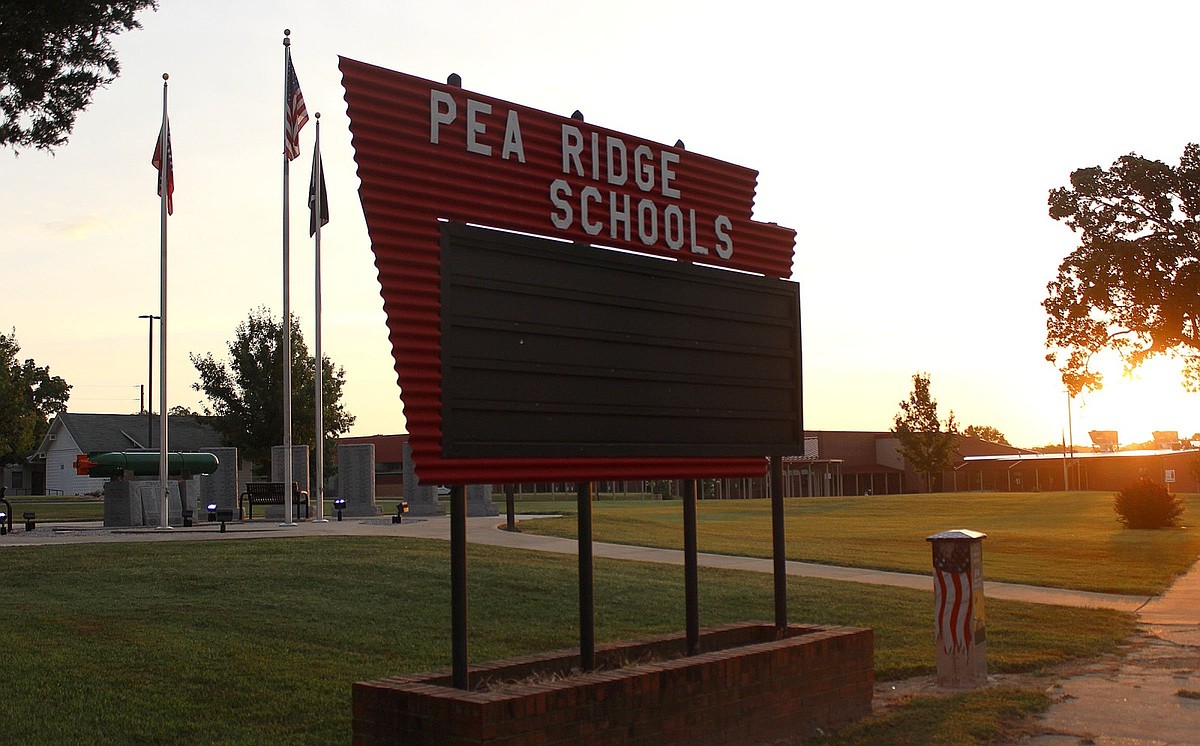
At Pea Ridge Intermediate School, the coaching from the Learner Collective led the school down an entirely different path than the one its leadership team originally set out to forge.
The third and fourth grade school first decided to focus on intervention methods in hopes of improving test scores, but following feedback from a community survey which the collective team suggested, the school discovered “we were way off the mark,” Pea Ridge Principal Mindy Bowlin said.
“We went back to the drawing board” to begin addressing the public’s top priority of increased community engagement, Bowlin said, adding that “at the beginning, we thought we had a lot of parent engagement” but realized after the survey that the school’s events were not “hitting the mark.”
“I think parents want to see their kids engaged in what they’re doing every day and we had the misconception that because we had them on campus, we had great involvement and we were allowing parents to be involved with their kiddos academics, and that just wasn’t the case,” Bowlin said, adding that the mindset of the school has “completely shifted” since then.
Throughout the school year, the school has held community committee meetings wherein parents are involved in creating school policies, academic strategies and planning communitywide events and initiatives — all in an effort to address other areas of improvement within the school, included test scores.
Maddy Mullin, a third grade teacher at Pea Ridge, said that parent feedback combined with teachers and other school staff being involved this school year, more than in previous years, has led to a focus on students getting involved in leadership roles.
One product of the community committee meetings are student-led, parent-teacher conferences which have been popular with parents and staff alike, and helps prepare students for their futures at a young age, Mullin said.
She noted that while identifying “what the right pathway was” for the school at first was difficult, working through ideas with fellow staff members and engaging everyone schoolwide in the process reinforces the idea that “we have the brainpower and the workforces in here” to solve the school’s problems.
For Maddie Massanelli, a fourth grade teacher at the school, the collective’s encouragement “to look within” allowed the school to tap into expertise and utilize its own resources more effectively.
She added that the most valuable part of the collective has been relationships with the coaches and the resulting partnership between the school and the community, noting that the school’s team plans on “continuing to do the things that they’ve given us to put into the toolbox.”
Involving the community and teachers throughout this process helps “keep people in the building,” Massanelli said of the collective’s process, adding that she hopes to continue the collaborative work in the future.
To Kutylo, using resources already within the schools themselves contributes to the collective’s sustainability.
“Everything we do is about more deeply understanding the challenges and the root challenges, acknowledging and taking stock of the resources that they already have” and then creating innovative solutions to address issues, he said, adding that the initiative “is about building their capacity” to rethink how they are approaching challenges.
Even when the program ends, the network will continue, Kutylo said, noting that the goal is to expand statewide within the next few years and to continue providing support to current initiative participants.
“We are never going to have as many resources as we want, so we have to think differently about how we’re using the resources that we have,” Kutylo said. “That requires people locally to buy in and have a lead role in determining what that looks like.”
link